
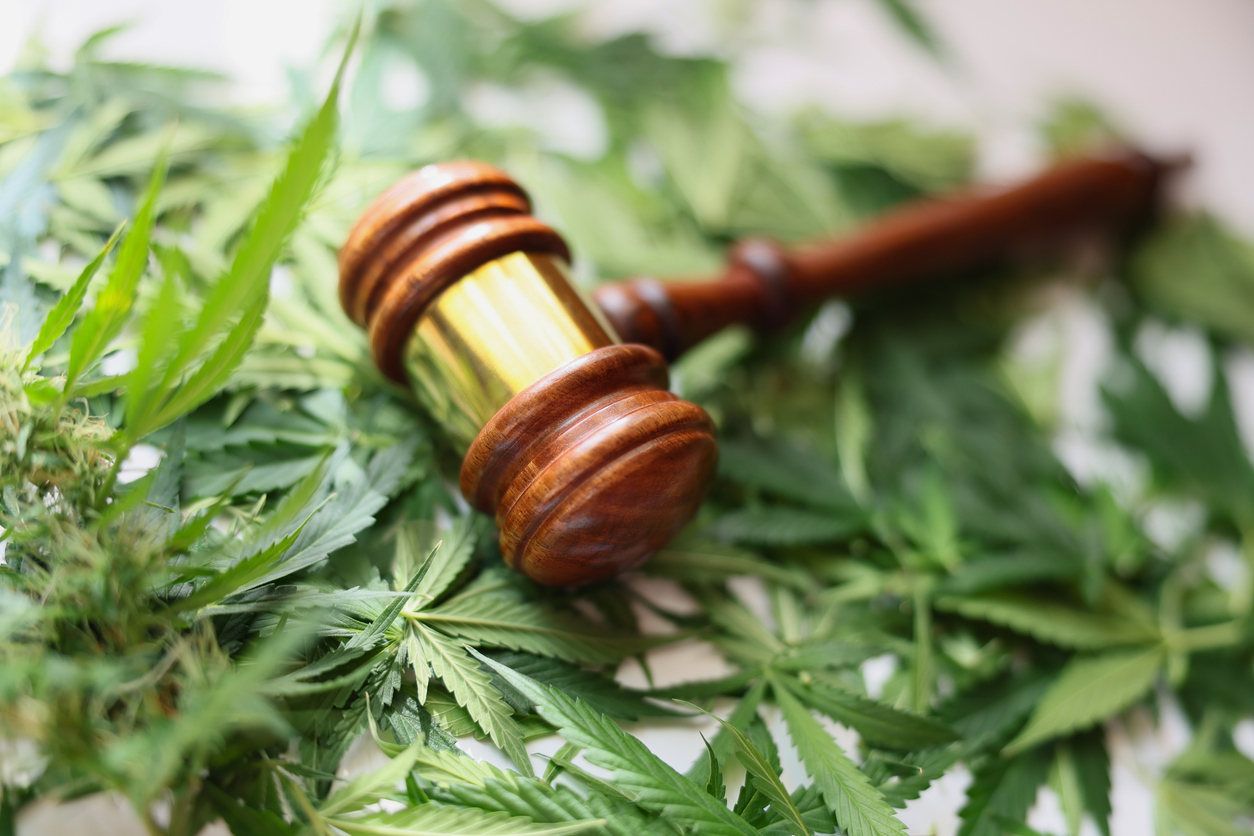
Federal Policy Shift Signals Major Changes for Hemp and Cannabis
Recent federal developments reflect both momentum toward reform and new regulatory crackdowns in the cannabis/hemp sector. On one hand, the federally legal status of “hemp” was a major step in 2018. On the other hand, the federal government is now taking renewed enforcement stances and revisiting key definitions in ways that could upend parts of the hemp and cannabis industries.
A recent article from Marijuana Moment reports that the office of a U.S. attorney in Wyoming said the administration views marijuana use as a “public safety hazard” and intends to “rigorously” prosecute possession on federal lands. Marijuana Moment at the same time, Congress recently embedded a provision in a government-funding bill that would effectively ban many hemp-derived THC products under federal law, reversing a “loophole” created under the 2018 Farm Bill.
Thus, the federal cannabis policy terrain is in flux: while broader legalization remains a goal of many advocates, simultaneous regulatory tightening—especially in the hemp-derived THC space—is taking place.
What the 2018 Farm Bill did
The 2018 Farm Bill (formally the Agriculture Improvement Act of 2018) legalized hemp at the federal level. Key points:
- It defined “hemp” as the plant Cannabis sativa L. (and its derivatives) so long as it contained no more than 0.3% delta-9-THC on a dry weight basis.
- It removed hemp (meeting that threshold) from the federal Controlled Substances Act list of “marijuana,” thus making hemp a legal agricultural commodity.
- It created a federal regulatory framework — under the United States Department of Agriculture (USDA) — for state and tribal hemp production plans.
- As a result, hemp-derived products (especially CBD and other less-intoxicating cannabinoids) proliferated in many states and markets.
In short, the Farm Bill opened the door for a legitimate hemp industry, but also left regulatory gaps, particularly as manufacturers found ways to extract or convert hemp derivatives into more potent intoxicants.
The “loophole” and emergent issues
Even though hemp was defined strictly by the 0.3% delta-9-THC threshold, regulators and lawmakers began to note that manufacturers were exploiting the regulatory definition. Some of the emergent issues:
- Hemp plants with legal THC levels could be processed and converted into products containing cannabinoids like delta-8-THC, THCA, HHC, or other variants. These cannabinoids might fall outside the precise definition of “delta-9-THC” or were not explicitly addressed by the Farm Bill.
- Some states permitted the sale of “hemp-derived” consumables (gummies, drinks, vapes) that purportedly contained legal hemp-derived cannabinoids, but critics argued they mirrored recreational marijuana products in effect.
- Law enforcement, public-health, and regulatory officials raised alarms about youth access, lack of consistent lab testing, insufficient age verification, and the general complexity of the product landscape.
Thus, what had started as an agricultural legalization (of hemp) morphed into a regulatory challenge: distinguishing hemp-derived products that are legitimate agriculture/wellness goods from those that behave like intoxicating recreational cannabis.
Recent federal crackdowns and new rules
Prosecutorial signals
As the Marijuana Moment article highlights, a U.S. Attorney in Wyoming publicly stated that the administration considers marijuana use a “public safety hazard” and intends to aggressively prosecute possession on federal lands—even in states where cannabis is legal. Marijuana Moment sends a signal: federal enforcement posture may be hardening even as state legalization spreads.
Farm Bill/Spending-bill changes
More significantly, from a regulatory and industrial standpoint, Congress in late 2025 included in a government spending/budget bill a provision that would ban many hemp-derived THC products. Here are the key features:
- The new rule would prohibit products derived from hemp that contain more than 0.4 milligrams of THC (or other cannabinoids with “similar effects”) per container.
- It also defines that synthetic cannabinoids, or hemp‐derived cannabinoids that are not naturally present in the plant (or that are “intermediate products” marketed directly to consumers) may be excluded from the definition of legal hemp.
- The change is intended to take effect in approximately one year from enactment (giving the industry a transition period), but it is widely viewed as a major disruption to the market for hemp-derived consumables.
- The legislative impetus was driven in part by concerns about youth access, poorly regulated THC-infused beverages and gummies, and states’ inability to control interstate online commerce of these products.
In effect, this move closes what many call the “hemp-derived THC loophole” that was created by the Farm Bill’s broad definition.
What this means for the cannabis/hemp industries
For hemp farmers, processors, and retailers
This regulatory shift has large implications:
- Many hemp-derived consumable products (gummies, drinks, vapes) may become federally illegal if they contain more than the new THC/milligram threshold or contain other “similar effect” cannabinoids. This could eliminate large segments of the current market.
- Hemp growers whose business models rely on high-throughput extraction for such products may face major disruption, loss of markets, or need to pivot to fiber, seed, oil, or solely non-intoxicating CBD goods.
- State regulatory frameworks will need to align with federal changes, or risk conflicts; this could mean states will have to halt certain hemp-derived consumables or enforce tighter limits.
- For companies in legal state-regulated adult‐use marijuana markets, the crackdown might provide a competitive advantage (by eliminating grey-market hemp products), but it also raises questions about federal enforcement risk moving forward.
For cannabis legalization advocates
- The federal enforcement posture (e.g., Wyoming U.S. Attorney’s statements) suggests that the goal of fully removing cannabis from federal prohibition remains uphill, especially until Congress acts or the executive branch revises scheduling.
- On the positive side, the regulatory “closing of the loophole” may clarify distinctions and push the government toward comprehensive federal regulation rather than piecemeal or ambiguous status.
- But there’s risk: tightening hemp definitions while cannabis (marijuana) remains illegal federally may create a patchwork where many states allow adult-use but federal law still penalizes possession or transport, especially across state lines.
For consumers and patients
- Products once marketed broadly as “hemp-derived” with low-dose THC may be removed from shelves or relabeled; consumers may face reduced choice or need to purchase from state-licensed adult-use dispensaries.
- Regulatory clarity may enhance product safety (better testing, age verification, labeling) but also possibly raise prices or reduce availability.
- For people relying on hemp-derived products for wellness (e.g., low-dose THC, CBD), the regulatory changes may create disruption in the supply or availability of preferred products.
Where things stand now and near-term outlook
- The spending bill (ending the government shutdown) has already been signed (or is expected to be signed) with the hemp-THC provisions included.
- The federal regulatory mechanism (via USDA and other agencies) is updating hemp oversight; for example, USDA is delaying enforcement of certain hemp testing requirements until December 31, 2025.
- The scheduling status of cannabis (marijuana) under the federal Controlled Substances Act remains unchanged; however, there are pending rule-making/redesign efforts (or at least discussion) around rescheduling or descheduling.
- States will continue to diverge in how they classify hemp-derived consumables, adult-use marijuana, medical cannabis, and how their regulatory frameworks align with federal rules.
- The year ahead will likely see:
- Industry efforts to revise or repeal the hemp-THC restrictions (or find regulatory safe-harbors)
- Legal challenges or lobbying around the new definition of hemp and which cannabinoids qualify
- Federal agency rule-making or guidance to implement the spending bill provisions
- Further action or debate in Congress on broader cannabis reform (adult-use legalization, banking, rescheduling)
As the federal government moves to redefine hemp, restrict hemp-derived THC products, and signal stricter cannabis enforcement, the industry is entering a period of significant transition. Businesses, policymakers, consumers, and advocates alike will face shifting rules, new compliance demands, and ongoing uncertainty as the regulatory landscape evolves. While these changes present real challenges, they also offer an opportunity to reassess strategies and prepare for a more unified federal framework in the future.
If you’re unsure how these developments may affect your operations, compliance obligations, or long-term planning, now is the time to seek guidance. Our team can help you navigate these changes and position you for what comes next.